Periodontitis, Porphyromonas gingivalis, and the inflammatory pathways linking gum disease to neurodegeneration
Key Highlights
- Chronic periodontitis represents a persistent, modifiable source of systemic inflammation that may amplify neuroinflammatory pathways implicated in Alzheimer’s disease.
- Porphyromonas gingivalis functions as a keystone periodontal pathobiont whose virulence factors—gingipains and lipopolysaccharide—are mechanistically linked to amyloid beta aggregation, tau hyperphosphorylation, and blood-brain barrier disruption.
- Alzheimer’s-associated oral dysbiosis reflects both pathogenic enrichment and depletion of protective commensal species, emphasizing ecological imbalance rather than isolated infection.
- Early periodontal diagnosis, comprehensive therapy, and strict long-term maintenance may reduce systemic inflammatory burden in patients at elevated neurodegenerative risk.
Introduction
Periodontitis is a prevalent chronic inflammatory disease driven by dysbiotic subgingival biofilms. Growing evidence supports an association between periodontal disease and Alzheimer’s disease (AD), with Porphyromonas gingivalis emerging as a key microbial link. This article reviews the latest evidence connecting periodontal inflammation, oral microbial dysbiosis, and neurodegeneration, with a focus on gingipain-mediated amyloid beta aggregation, tau hyperphosphorylation, blood-brain barrier disruption, and Toll-like receptor-driven neuroinflammation. While causality has not been definitively established, a new study demonstrates the convergence of epidemiologic, mechanistic, animal, and postmortem human data supports periodontal disease as a biologically plausible, modifiable risk factor in Alzheimer’s disease progression.1
The oral-brain axis in Alzheimer's disease
The oral microbiome represents the second most abundant microbial ecosystem in the human body, surpassed only by the gastrointestinal tract. Despite significant advances in sequencing technologies, the oral microbiome remains incompletely characterized, with approximately 30% of identified species remaining uncultivable. Periodontitis, a biofilm-induced inflammatory disease, has increasingly been proposed as a contributor to systemic inflammatory conditions, including neurodegenerative disorders such as Alzheimer’s disease.2 Given the difficulty of studying AD longitudinally prior to death, mechanistic pathways linking oral disease to neurodegeneration have historically been challenging to elucidate.
Additional reading: What is methylene blue?
The oral microbiome
The oral cavity hosts a highly diverse and dynamic microbial community that colonizes distinct niches, including supragingival and subgingival tooth surfaces, gingival crevices, tongue dorsum, tonsils, and oral mucosa.3 These microorganisms interact directly with host immune, metabolic, and epithelial systems. Disruptions to this microbial equilibrium—referred to as dysbiosis—have been associated with systemic diseases such as diabetes mellitus, cardiovascular disease, autoimmune disorders, and malignancy, as well as emerging links to neurodegenerative disease.
Periodontitis as a chronic inflammatory disease
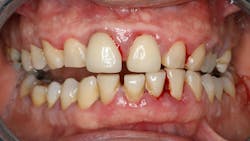
Periodontitis affects nearly half of adults worldwide and is characterized by gingival inflammation, periodontal pocket formation, clinical attachment loss, and alveolar bone destruction.4 The disease is driven by a pathogenic biofilm composed predominantly of gram-negative anaerobes, which provoke a sustained host inflammatory response. Routine activities such as mastication and toothbrushing can induce transient bacteremia, allowing periodontal pathogens and inflammatory mediators to enter systemic circulation.
Porphyromonas gingivalis as a main player in Alzheimer’s disease
Among periodontal pathogens, Porphyromonas gingivalis has been most strongly implicated in Alzheimer’s disease. As a keystone pathobiont, P. gingivalis exerts disproportionate effects on host immunity and microbial ecology. Its virulence factors include gingipains—cysteine proteases—and lipopolysaccharide (LPS), both of which disrupt immune regulation and tissue barriers.5 Postmortem studies have identified P. gingivalis DNA and gingipains in AD brain tissue, supporting biological plausibility for oral-brain translocation.
What is the link between periodontitis and Alzheimer’s disease?
Multiple mechanisms have been proposed to explain the association between periodontal disease and AD. Gingipains have been shown to promote amyloid beta aggregation and tau hyperphosphorylation in experimental models. Additionally, periodontal pathogens activate Toll-like receptor (TLR) 2 and 4 pathways, triggering microglial activation and the release of proinflammatory cytokines such as interleukin-1β, interleukin-6, and tumor necrosis factor–α. These processes may be amplified by blood-brain barrier disruption, allowing inflammatory mediators to access the central nervous system.
Oral dysbiosis and loss of protective commensals
Importantly, Alzheimer’s-associated oral dysbiosis is characterized not only by pathogenic enrichment but also by depletion of health-associated commensal species. Reduced abundance of Streptococcus salivarius and Neisseria species may impair colonization resistance and anti-inflammatory signaling, exacerbating systemic inflammation. This ecological perspective reinforces that dysbiosis, rather than isolated infection, underlies disease progression.
What systemic diseases amplify Alzheimer’s disease?
Systemic diseases such as diabetes mellitus, hypertension, chronic kidney disease, and autoimmune disorders amplify inflammatory and vascular pathways implicated in Alzheimer’s disease. These conditions also predispose patients to more severe periodontal disease, creating a bidirectional relationship between oral dysbiosis and systemic inflammation.6
What are the clinical implications for the practicing dental care professional?
For dental care professionals, the oral-brain axis reinforces the importance of early diagnosis, comprehensive periodontal therapy, and long-term maintenance. While periodontal treatment should not be presented as a therapy for AD, controlling periodontal inflammation represents a rational approach to reducing systemic inflammatory burden.7 Patients with metabolic or vascular comorbidities may benefit from heightened periodontal surveillance and interdisciplinary communication.
Future directions and oral therapeutic potential for Alzheimer’s disease
Emerging strategies targeting the oral microbiome include gingipain inhibitors, antimicrobial approaches, and probiotic or prebiotic modulation. Noninvasive biomarkers derived from saliva or gingival crevicular fluid may eventually support early risk stratification for Alzheimer’s disease. Longitudinal and interventional studies remain necessary to establish causality.
Conclusion
The accumulating body of evidence supports a biologically plausible association between periodontitis and Alzheimer’s disease mediated through chronic inflammation and microbial dysbiosis. Porphyromonas gingivalis emerges as a key mechanistic link through its ability to promote amyloid beta aggregation, tau pathology, and neuroinflammation. From a periodontal perspective, these findings reinforce the broader systemic relevance of periodontal therapy and support its role in preventive health-care strategies.
Editor’s note: This article originally appeared in Perio-Implant Advisory, a chairside resource for dentists and hygienists that focuses on periodontal- and implant-related issues. Read more articles and subscribe to the newsletter.
References
- Rozenblum G, Ait-Aissa K, Zahran G, et al. Unraveling the oral microbiome’s role in Alzheimer’s disease: from pathophysiology to therapeutic potential. Alzheimers Dement. 2025;21(12):e71011. doi:10.1002/alz.71011
- Verma D, Garg PK, Dubey AK. Insights into the human oral microbiome. Arch Microbiol. 2018;200(4):525-540. doi:10.1007/s00203-018-1505-3
- Sender R, Fuchs S, Milo R. Revised estimates for the number of human and bacteria cells in the body. PLoS Biol. 2016;14(8):e1002533. doi:10.1371/journal.pbio.1002533
- Nazir MA. Prevalence of periodontal disease, its association with systemic diseases and prevention. Int J Health Sci (Qassim). 2017;11(2):72-80.
- Cesari C, Belleri G, Fabrizi S, Zangari F. Linking periodontitis and Alzheimer’s disease: systemic inflammation as a shared mechanism. Acad Mol Biol Genom. 2025;2(2). doi:10.20935/AcadMolBioGen7734
- Ramos JJJ, Pupo NMG, Mena D, Solis RP, Jaramillo JEB, Solano MV. Cognitive decline in chronic inflammatory conditions: exploring links between systemic inflammation and neurodegeneration. Cureus. 2025;17(7):e88397. doi:10.7759/cureus.88397
- Teixeira FB, Saito MT, Matheus FC, et al. Periodontitis and Alzheimer’s disease: a possible comorbidity between oral chronic inflammatory condition and neuroinflammation. Front Aging Neurosci. 2017;9:327. doi:10.3389/fnagi.2017.00327
About the Author
 Scott Froum, DDS
Scott Froum, DDS
Editorial Director
Scott Froum, DDS, a graduate of the State University of New York, Stony Brook School of Dental Medicine, is a periodontist in private practice at 1110 2nd Avenue, Suite 305, New York City, New York. He is the editorial director of Perio-Implant Advisory and serves on the editorial advisory board of Dental Economics. Dr. Froum, a diplomate of both the American Academy of Periodontology and the American Academy of Osseointegration, is in the fellowship program at the American Academy of Anti-aging Medicine, and is a volunteer professor in the postgraduate periodontal program at SUNY Stony Brook School of Dental Medicine. He is a trained naturopath and is the scientific director of Meraki Integrative Functional Wellness Center. Contact him through his website at drscottfroum.com or (212) 751-8530.