The ferrule effect and restorability of severely compromised teeth
Key Highlights
- The ferrule effect refers to the 360‑degree encirclement of sound tooth structure by a crown, which significantly increases fracture resistance in endodontically treated teeth.
- A minimum of 1.5–2.0 mm of sound tooth structure above the crown margin is widely accepted as the clinical guideline to achieve an adequate ferrule.
- Posts and cores do not strengthen teeth; preservation of natural coronal dentin is the primary determinant of long‑term restorative success.
- When ferrule cannot be predictably achieved, clinicians should consider surgical crown lengthening, orthodontic extrusion, or extraction with implant replacement.
Introduction
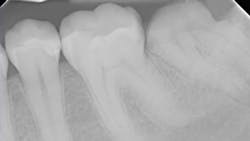
On many occasions, patients present to our offices with teeth lacking sufficient coronal tooth structure. Whether the loss of structure is due to caries, previous restorative procedures, or traumatic fracture, the remaining tooth structure must meet certain dimensional requirements to provide adequate resistance and retention form for a definitive restoration. If insufficient tooth structure remains, the tooth becomes significantly more susceptible to catastrophic failure, including root fracture or loss of retention of the final crown restoration.
One of the most critical biomechanical principles dentists consider when evaluating the restorability of endodontically treated teeth is the ferrule effect. The ferrule effect refers to the encirclement of sound tooth structure by the crown restoration, which significantly enhances the structural integrity of the tooth–restoration complex.
Classic prosthodontic concept
The term “ferrule effect” is described in Shillingburg’s classic prosthodontic textbook, Fundamentals of Fixed Prosthodontics, which emphasizes the importance of maintaining coronal dentin to resist functional forces.
“When all tooth structure has been lost to the level of the alveolar crest or beyond, because of either fracture or caries, the tooth cannot be satisfactorily restored without some extraordinary measure. Even if a dowel core is placed in the tooth, the root will remain susceptible to fracture without the crown encircling the tooth apical to the core. This ferrule effect around the tooth protects it from fracture by the dowel from within.”
This concept highlights a critical biomechanical principle: posts and cores do not reinforce teeth. Instead, their primary purpose is to retain a core restoration. The structural durability of the restored tooth is largely dependent on the amount of remaining natural tooth structure.
Ferrule effect in periodontal treatment planning
The ferrule effect is also discussed in the periodontal literature when evaluating teeth for surgical crown lengthening procedures. In Carranza’s Clinical Periodontology, the concept is applied to treatment planning when fractures or caries extend subgingivally.
If a tooth fracture extends to the level of the alveolar bone, the tooth must often be erupted approximately 4 mm through surgical crown lengthening or orthodontic extrusion. This dimension accommodates two critical biological and restorative requirements:
- Approximately 2.5 mm to reestablish the biologic width (supracrestal tissue attachment)
- Approximately 1.5 mm to provide adequate ferrule for crown resistance form
Failure to respect these dimensions may lead to biologic width violation, chronic inflammation, bone loss, and restoration failure.
Mechanical analogy
The Glossary of Prosthodontic Terms defines a ferrule as a metal band or ring used to fit the root or crown of a tooth. A helpful analogy is that of a wine barrel. The wooden staves of the barrel are held together by metal bands that encircle the structure. Without these bands, internal pressure would cause the wooden pieces to separate. Similarly, the crown restoration acts as the encircling band around the remaining tooth structure, distributing forces and reducing the risk of root fracture.
Evidence supporting the ferrule effect
The dimensional requirements for achieving an adequate ferrule have been widely studied. Sorensen and Engelman demonstrated that even 1 mm of coronal dentin above the crown margin significantly increases fracture resistance in endodontically treated teeth.
Further analysis by Morgano concluded that dentists should retain as much coronal tooth structure as possible when preparing pulpless teeth for complete crowns. Current literature generally recommends a minimum of 1.5–2 mm of sound tooth structure circumferentially above the crown margin to create a predictable ferrule effect.
Clinical decision tree: Crown lengthening vs. extraction and implant
When evaluating a severely compromised tooth, clinicians must determine whether sufficient ferrule can be predictably achieved. The following clinical decision pathway may assist in treatment planning:
Step 1: Evaluate remaining tooth structure
Is at least 1.5–2 mm of circumferential tooth structure present above the proposed crown margin?
• If YES → Tooth is likely restorable with post/core and crown
• If NO → Proceed to step 2.
Step 2: Evaluate potential to create ferrule
Can surgical crown lengthening expose sufficient tooth structure without compromising adjacent teeth or esthetics?
Can orthodontic extrusion predictably expose additional structure?
• If YES → Crown lengthening or orthodontic extrusion followed by restoration
• If NO → Proceed to step 4
Step 3: Evaluate prognostic factors
Consider:
• Root length and crown‑to‑root ratio after crown lengthening
• Furcation proximity
• Periodontal support
• Patient occlusal forces and parafunction
• Esthetic considerations
Step 4: Extraction and implant replacement
If adequate ferrule cannot be achieved without creating poor crown‑root ratio, periodontal compromise, or esthetic problems, extraction followed by implant/prosthetic fixed bridge therapy may provide the most predictable long‑term outcome.
Editor’s note: This article originally appeared in Perio-Implant Advisory, a chairside resource for dentists and hygienists that focuses on periodontal- and implant-related issues. Read more articles and subscribe to the newsletter. Originally published October 10, 2012. Updated March 11, 2026.
Sources
- Shillingburg HT, et al. Fundamentals of Fixed Prosthodontics. Quintessence Publishing.
- Sorensen JA, Engelman MJ. Ferrule design and fracture resistance of endodontically treated teeth. J Prosthet Dent. 1990;63(5):529-536. doi:10.1016/0022-3913(90)90070-s
- Morgano SM, Brackett SE. Foundation restorations in fixed prosthodontics: current knowledge and future needs. J Prosthet Dent. 1999;82(6):643-657. doi:10.1016/s0022-3913(99)70005-3
- The Glossary of Prosthodontic Terms. American Academy of Prosthodontics.
- Newman MG., et al. Carranza’s Clinical Periodontology.
About the Author
Brandon G. Katz, DDS
Brandon G. Katz, DDS, is a graduate of New York College of Dentistry, class of 2008. Upon completing his General Practice Residency at Stony Brook University Hospital in 2009, Dr. Katz trained in postgraduate prosthodontics, earning a certificate in prosthodontics from the Manhattan VA Medical Center in 2012. Currently, Dr. Katz is enrolled in the postgraduate program in periodontics at Stony Brook School of Dental Medicine and works in private practice in his free time.
 Scott Froum, DDS
Scott Froum, DDS
Editorial Director
Scott Froum, DDS, a graduate of the State University of New York, Stony Brook School of Dental Medicine, is a periodontist in private practice at 1110 2nd Avenue, Suite 305, New York City, New York. He is the editorial director of Perio-Implant Advisory and serves on the editorial advisory board of Dental Economics. Dr. Froum, a diplomate of both the American Academy of Periodontology and the American Academy of Osseointegration, is in the fellowship program at the American Academy of Anti-aging Medicine, and is a volunteer professor in the postgraduate periodontal program at SUNY Stony Brook School of Dental Medicine. He is a trained naturopath and is the scientific director of Meraki Integrative Functional Wellness Center. Contact him through his website at drscottfroum.com or (212) 751-8530.